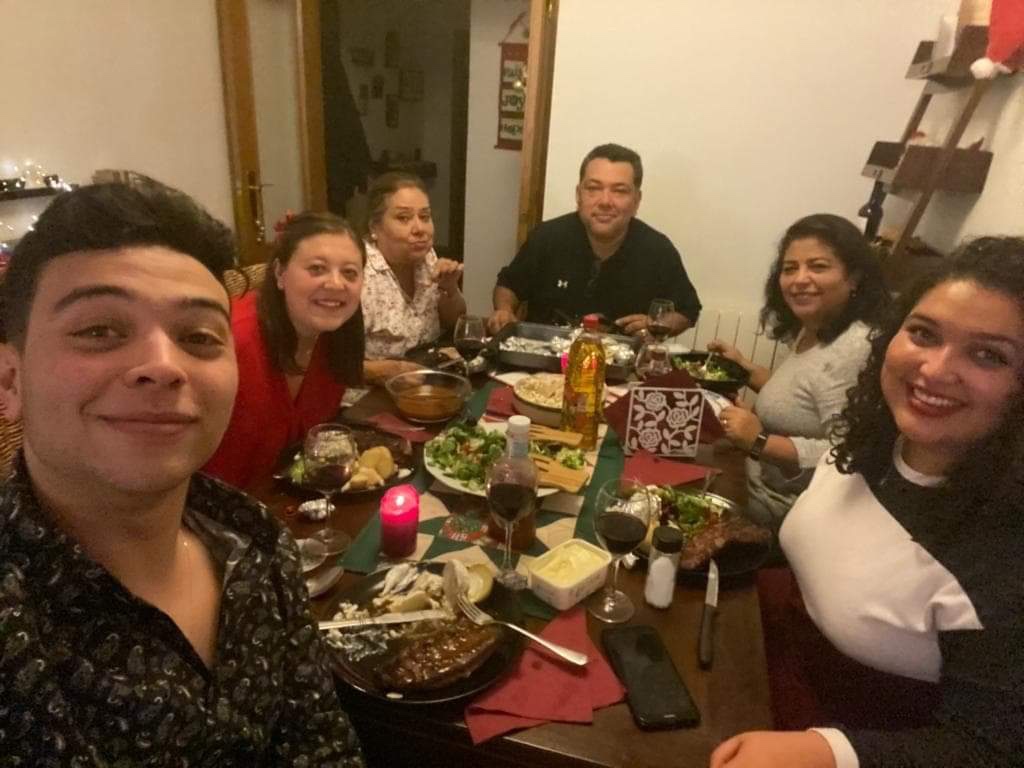
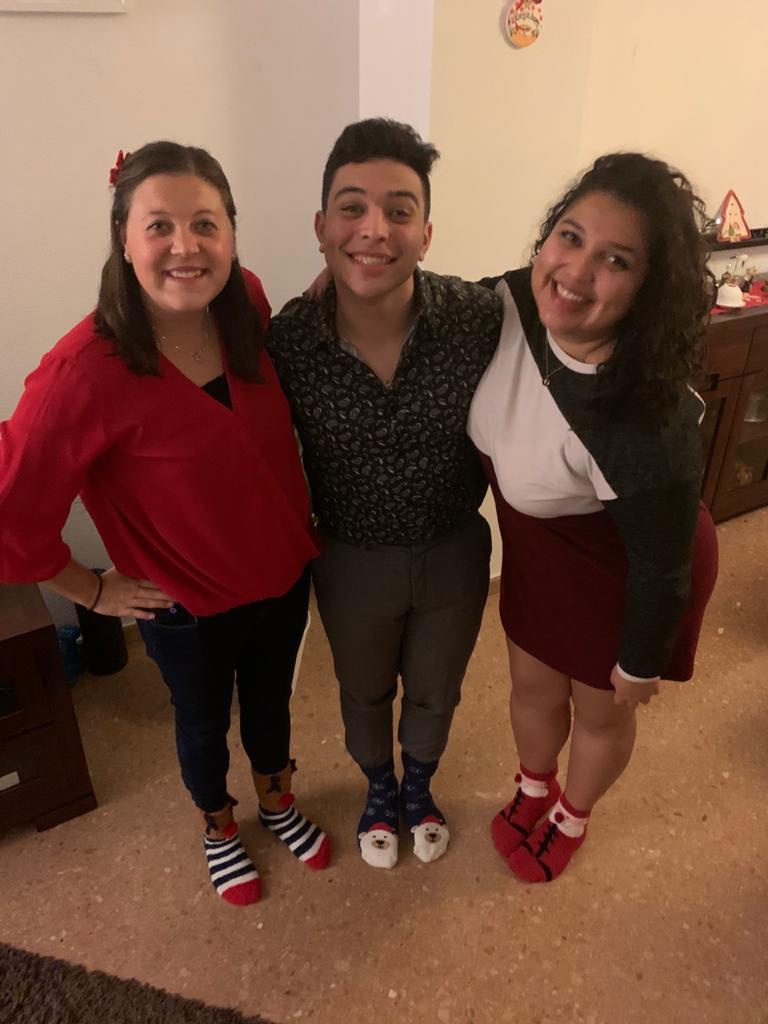
The Christmas of 2019 was spent in Valencia, Spain with a family of missionaries by God’s grace and direction. I met a Priscilla at The International Church of Barcelona and her family open their home to people who can’t be with their families on Christmas. I am very grateful that I was able to spend Christmas with their family who were Christians and able to Celebrate the Birth of Jesus Christ. This was a huge blessing.
One of my desires for the holidays was to experience a different culture on Christmas since I was going to be away from my family. God definitely answered that dream because it was a Christmas with a mixture of multiple cultures. Priscilla’s family were missionaries who have lived all over the world such as, Jordan, Morocco, Germany, have been to Israel multiple times. Their family roots are from Costa Rica, so I had a mixture of Spain’s culture and Costa Rica’s.
I arrived in Valencia, Spain on December 24th in the afternoon. Priscilla came to the train station to greet me. We went to the beach in Valencia and walked around. Valencia is very beautiful and I loved seeing the architecture. Priscilla, her brother, and one of her friends and I had lunch together, and then they took me to Airbnb. Priscilla introduced me to her family and showed me where her parents lived. I had cocktails and dinner with her family and enjoyed ceviche or seafood cooked with lemon. Her family told me that it was very normal for a latino/Hispanic culture to have ceviche for dinner. It was a wonderful night getting to know her family.
On December 25, I went to Priscilla’s house to have Tamales for breakfast. They explained to me that it is Latino/ Hispanic culture to eat tamales for breakfast and that each region has a different recipe. It was warm and cozy eating breakfast with them and it was a very chill day. We explored Valencia which has some beautiful buildings and architecture and grabbed some Greek desserts called Baklava. Priscilla’s family took good care of me and I am grateful for their generous hearts. My last dinner with them I enjoyed hearing testimonies of how Jesus has brought the unbelievers to Jesus Christ. I enjoyed hearing their wisdom and knowledge that they have gained in their journey with God.
Overall, this was a very different Christmas for me. It was odd not to be with my family. I did miss them. Spending the Christmas Holiday abroad didn’t feel like Christmas to me because I wasn’t with my family. It did not feel like Christmas because my “normal” traditions that I would do with my family did not happen. I missed wearing matching pajamas with my family on the 24th and opening up presents together on the morning of the 25th of December. I missed going to church with my family and then going home on Christmas Eve to eat dinner. This Christmas was very peaceful and was healing to not have to pick sides with my family with where to spend Christmas since my parents are divorce. It was freeing to have to rely more on Jesus Christ during this time. It was a time for me to really stand on true meaning of Christmas and celebrating the birth of Jesus Christ. I decided to put that as my focus.
Spain’s Christmas Traditions
Spain’s traditions during Christmas time:
Christmas traditions in Spain
On Christmas Eve most families eat their main meal. The most common Spanish Christmas dinner is ‘Pavo Trufado de Navidad’ which is turkey stuffed with truffles (the mushrooms, not the chocolate ones!) or ‘Pularda asada’ (a roasted young hen). Another most popular meal in northwest of Spain is eating seafood for the meal on Christmas Eve and on Christmas Day. It can be all different kinds of seafoods.
A few different languages are spoken in different regions in Spain. In Spanish Happy/Merry Christmas is ‘Feliz Navidad’; in Catalan it’s ‘Bon Nadal.’
April Fools Day in the UK and USA is on December 28th in Spain and it is called ‘Día de los santos inocentes’ or or ‘Day of the Innocent Saints’. People try to trick each other into believing silly stories and jokes. Newspapers and TV stations also tell silly stories. All over the world remember the babies that were killed on the orders of King Herod when he was trying to kill the baby Jesus.
There is another festival that is celebrated in Spain that is about the Christmas Story. This is called Epiphany and is celebrated on 6th January. In Spanish, Epiphany is called ‘Fiesta de Los tres Reyes Mages’: in English this means ‘The festival of the Three Magic Kings’. Epiphany celebrates when the Kings or Wise men brought gifts to the baby Jesus.Children have some presents on Christmas Day, but most are opened Epiphany. Children believe that the Kings bring presents to them on Epiphany. They write letters to the Kings asking for toys and presents. In the States, we write letters to Santa asking for presents. And on Epiphany Eve (January 5th) they leave shoes on windowsills or balconies or under the Christmas tree to be filled with presents. Gifts are often left by children for the Kings, a glass of Cognac for each King, a satsuma, and some walnuts. Sometimes a bucket of water is left for the camels that bring the Kings. If the children have been bad, the Kings might leave pieces of coal made out of sugar in the presents.
Spain has Epiphany Parades in some towns or cities with each King having a big float that is shaped like a camel. Sometimes there are also real camels in the parade
In the Catalonia region of Spain, there’s a Christmas character called ‘Tió de Nadal’ (the Christmas log). He is sometimes known as ‘Caga Tio’ (the pooping log!). It’s a small hollow log propped up on two legs with a smiling face painted on one end. Catalan families have (the Feast of the Immaculate Conception) from 8th December to give the log a few morsels of food to ‘eat’ and a blanket to keep it warm. On Christmas Day or Christmas Eve, the log then ‘gives out’ small gifts! People sing a special song and hit the log with sticks to help its ‘digestion’ and the log drops sweets, nuts, and dried fruits. When garlic or gifts, or onion fall out of the log, all of the treats are finished for the year.

 Traveling Adventure's